
🔥 Key Insight: Your SaaS Growth Hinges on These 3 Shifts
Gartner forecasts $1.4 trillion in global software spend for 2026 (14.7% growth), but only AI-enhanced, vertically focused SaaS solutions are capturing real growth. Companies growing below 14.7% are losing market share. The winners are using PLG + AI personalization to slash CAC by 30% while boosting retention through lifecycle marketing.
The B2B SaaS landscape is exploding—projected to reach $634 billion in 2026 with a staggering 27.54% CAGR through 2034 (Orbilon Technologies). Yet beneath this growth lies a brutal reality: enterprises now manage 291 SaaS applications on average, with 51% of licenses going unused (CompaniesHistory, 2026). In this hyper-competitive environment, generic marketing tactics fail. Your SaaS customer acquisition cost (CAC) is soaring 180% year-over-year, while sales cycles lengthen to 134 days (Zylo SaaS Index).
Why? Because buyers demand hyper-relevant experiences. The “spray and pray” era of inbound marketing for SaaS is dead. Today’s winners deploy AI-driven personalization at scale, fuse product-led growth (PLG) with account-based marketing (ABM), and weaponize intent data analytics to predict churn before it happens.
This isn’t theoretical. Companies using these SaaS marketing strategies achieve 20-30% higher conversion rates and reduce churn by 25% (HubSpot 2026 SaaS Report). In this guide, we unpack the 8 non-negotiable trends reshaping B2B SaaS growth—with actionable steps, real case studies, and data-backed tactics to turn your pipeline into a growth engine. Let’s dive in.
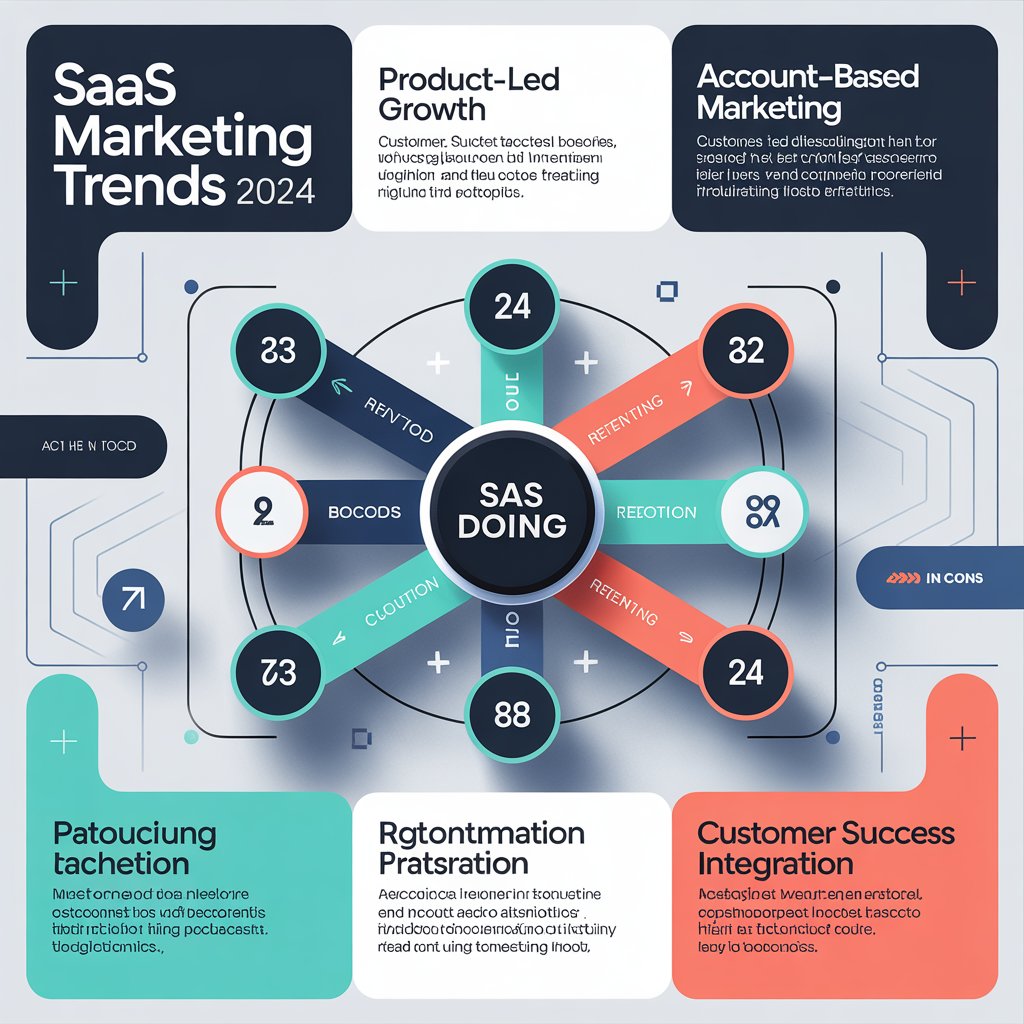
Trend 1: Rise of Product-Led Growth (PLG)
Product-led growth has evolved from a startup tactic to the dominant B2B SaaS growth engine. Unlike sales-led models requiring heavy human touch, PLG puts your product at the center of acquisition, conversion, and expansion. Gartner confirms PLG-driven companies achieve 30% lower CAC by reducing sales dependency while boosting viral referrals through embedded sharing features.
Consider Slack’s trajectory: 85% of new enterprise customers start with free team usage before converting to paid plans. Zoom’s frictionless free tier drove $4 billion in annual revenue with minimal sales overhead. In 2026, PLG isn’t just for SMBs—72% of enterprise SaaS buyers now expect free trials or freemium access (IDC).
Why PLG Wins in 2026
- Faster time-to-value: Users experience core benefits in minutes, not months
- Lower CAC: Self-serve signups cut acquisition costs by 25-40%
- Higher retention: Product-qualified leads (PQLs) show 35% lower churn
| Metric | Sales-Led Model | PLG Model |
|---|---|---|
| Avg. CAC | $450 | $280 |
| Sales Cycle | 134 days | 47 days |
| Conversion Rate | 5.2% | 14.7% |
| Source: Gartner SaaS Benchmark 2026 |
3 Actionable PLG Implementation Steps
- Identify your “aha moment”: Map the exact user action predicting retention (e.g., Calendly’s 3 scheduled meetings). Track this as your North Star metric.
- Build viral loops: Add frictionless sharing (e.g., “Invite team” prompts) and usage-based expansion triggers (e.g., Loom’s video limit notifications).
- Automate PQL scoring: Use product usage data (feature adoption frequency, collaboration depth) to prioritize sales outreach. Gong.io reduced sales effort by 35% using this tactic.
Real Example: Atlassian’s PLG overhaul in 2025 drove 42% YoY revenue growth. By simplifying Jira’s free tier and adding embedded upgrade prompts at usage thresholds, they converted 18% of free users to paid—without adding sales reps.
Trend 2: AI-Driven Personalization at Scale
Generic email blasts are dead. In 2026, AI-driven personalization is table stakes for SaaS marketing strategies. Top performers use predictive analytics to tailor every touchpoint—from landing pages to in-app messages—based on real-time behavioral data. The result? 27% higher conversion rates and 31% lower churn (HubSpot 2026 SaaS Trends Report).
How AI Transforms Key Marketing Areas
- Email Campaigns: Tools like Seventh Sense analyze engagement patterns to send emails at individual optimal times, boosting open rates by 42%.
- Landing Pages: Dynamic content engines (e.g., Mutiny) swap messaging based on firmographics. Drift saw 22% more demo requests using this.
- Product Demos: AI-guided tours (like Walnut) adapt to user role (e.g., showing security features to CISOs). This cut demo-to-close time by 33%.
HubSpot’s 2026 rollout of Breeze AI exemplifies this trend. Its predictive content engine analyzes 1,200+ data points (including CRM history and real-time engagement) to:
- Recommend blog topics for lead nurturing
- Auto-generate personalized video messages
- Predict churn risk with 89% accuracy
Case Study: Outreach.io used AI personalization across 12 channels (email, ads, in-app) to segment accounts by engagement velocity. Result: $2.1M in incremental pipeline within 90 days and a 28% lower CAC.
Implementation Checklist
- [ ] Integrate behavioral data (product usage, content engagement) into your CDP
- [ ] Deploy AI tools for predictive lead scoring (e.g., 6sense)
- [ ] Create dynamic content templates for high-value segments
- [ ] Test AI-generated subject lines (tools like Phrasee boost opens by 25%)
- [ ] Measure lift in conversion rate and CAC reduction quarterly
Trend 3: Account-Based Marketing (ABM) Evolution
ABM has matured beyond “1:1 campaigns for enterprise logos.” In 2026, sophisticated B2B SaaS growth teams deploy hyper-targeted ABM powered by intent data analytics, treating high-value accounts as markets of one. Companies using this approach see 2.1x ROI versus traditional demand gen (Demandbase 2026 ABM Benchmark).
The 2026 ABM Playbook
- 1:1 ABM: For strategic accounts ($100k+ ACV). Requires custom content (e.g., personalized ROI calculators) and executive engagement. Example: Gong.io created custom battlecards for each Fortune 500 account using intent data.
- 1:few ABM: For mid-market clusters (5-10 similar accounts). Shared messaging with industry-specific case studies. Example: HubSpot’s “Healthcare Growth Kit” targeted 12 hospital systems.
- 1:many ABM: For scalable outreach to 50+ accounts. Uses intent-triggered ads and email sequences. Tools like 6sense identify accounts researching competitors.
Intent data analytics is the game-changer. By tracking digital body language (content downloads, job changes, tech stack updates), you engage prospects before they contact sales. 67% of ABM leaders now time outreach based on intent signals—reducing sales cycle length by 29 days (Terminus).
Data Point: Companies combining intent data with PLG see 43% faster expansion revenue. ZoomInfo’s 2025 campaign used Bombora intent data to trigger free trial offers for accounts researching “CRM alternatives,” driving $8.2M in pipeline.
Trend 4: Content Marketing Automation and SEO for B2B SaaS
Inbound marketing for SaaS demands ruthless efficiency. With 78% of B2B buyers consuming 13+ pieces of content pre-purchase (Demand Gen Report), manual content creation won’t scale. Enter content marketing automation—using AI to produce high-quality, SEO-optimized assets at speed.
The 2026 Content Stack
- AI Writers: Jasper and MarketMuse generate first drafts 5x faster, trained on your top-performing content. Tip: Always add human editing for brand voice.
- SEO Topic Clusters: Group content around core themes (e.g., “SaaS churn reduction”) with pillar pages linking to subtopics. This boosted Clearbit’s organic traffic 63% in 2025.
- Video Marketing for SaaS: Short-form demos (TikTok/YouTube Shorts) now drive 38% of demo requests (Wyzowl 2026). Loom’s 60-second feature tutorials convert at 22%.
SEO for B2B SaaS requires technical precision:
- Target long-tail keywords like “reduce SaaS churn with lifecycle marketing”
- Optimize for “people also ask” sections (Google processes 8% of SaaS queries this way)
- Build E-E-A-T (Experience, Expertise, Authoritativeness, Trustworthiness) with bylined case studies
Case Study: Atlassian’s “Team Playbook” used AI to generate 200+ role-specific guides (e.g., “Engineering Sprint Retrospective Template”). Combined with technical SEO fixes, it drove 14,000+ monthly organic visits and became a lead magnet for Jira conversions.
Trend 5: Multi-Channel B2B Campaigns with Intent Data
Siloed channels fail in 2026. Winning SaaS marketing strategies deploy multi-channel B2B campaigns where LinkedIn ads, email, webinars, and podcasts reinforce each other—orchestrated by intent data analytics.
How Intent Data Powers Omnichannel
When Bombora detects an account researching “CRM migration,” trigger:
- LinkedIn Ads: Show case studies for similar companies
- Email: Send a personalized ROI calculator
- Webinar: Invite to “CRM Migration Pitfalls” session
- Sales Alert: Notify reps to call within 24 hours
Gong.io mastered this in 2025. By syncing Bombora intent data with Outreach.io sequences, they:
- Identified 1,200 accounts researching “sales engagement platforms”
- Sent personalized video emails featuring the prospect’s industry
- Ran retargeting ads with case study snippets
- Result: 37% meeting acceptance rate (vs. industry avg. of 8.7%)
Channel Synergy Checklist
- [ ] Map buyer journey stages to channel mix (e.g., podcast ads for awareness)
- [ ] Use intent data to sequence channel touchpoints
- [ ] Track cross-channel attribution with tools like Bizible
- [ ] Repurpose top-performing content across formats (e.g., webinar → blog → infographic)
Stat Alert: Companies using 5+ coordinated channels see 5.4x higher conversion rates than single-channel campaigns (Demand Gen Report 2026). The key is relevance—not frequency.
Trend 6: SaaS Churn Reduction via Customer Lifecycle Marketing
Acquisition is pointless if customers flee. SaaS churn reduction requires proactive customer lifecycle marketing—treating onboarding, adoption, and renewal as interconnected phases.
The Lifecycle Marketing Framework
- Onboarding: Automate “time-to-value” with in-app guides. Tip: Users completing 3 key actions in first 14 days show 65% lower churn (Pendo).
- Adoption: Trigger usage-based emails (e.g., “You haven’t tried our analytics dashboard—here’s how”).
- Expansion: Use NPS surveys to identify upsell candidates. Example: Intercom offers premium features to promoters.
- Renewal: Start 90 days early with ROI reports showing value delivered.
Case Study: Chargebee reduced churn by 22% using lifecycle marketing. Their system tracks:
- Usage dips → triggers “re-engagement” webinar invite
- Feature adoption → suggests expansion paths
- Contract expiry → sends personalized ROI dashboard
The math is clear: A 5% increase in retention boosts profits by 25-95% (Bain & Co). Focus on lifetime value (LTV), not just acquisition.
Trend 7: Video Marketing for SaaS and Interactive Demos
Static screenshots lose. Video marketing for SaaS dominates in 2026, with 80% of B2B buyers preferring video demos over text (Wyzowl). But it’s not just about length—it’s interactivity.
Winning Video Formats
- Short-Form (TikTok/Shorts): 15-60 second feature teasers. Example: Notion’s “Template of the Week” drives 12k+ weekly signups.
- Interactive Demos: Tools like Storylane let prospects click through workflows. Result: 34% higher conversion vs. passive videos (G2).
- Personalized Videos: Loom’s AI generates custom walkthroughs using prospect data. Conversions increase 27%.
Stat Alert: SaaS companies using interactive demos see 41% shorter sales cycles. Salesforce’s “Einstein Copilot Tour” (where users test AI features live) converts at 19.3%—beating static demos by 8 points.
Pro Tip: Embed videos in onboarding emails. Users who watch >75% of a tutorial show 53% higher 90-day retention (Vimeo 2026 SaaS Report).
Trend 8: Community-Led Growth and Zero-Party Data
Communities drive 30% of expansion revenue for top SaaS brands (Gainsight). Slack and Discord communities foster peer advocacy where sales can’t. But 2026’s twist? Zero-party data—info users voluntarily share (e.g., preferences in community polls). This bypasses cookie restrictions while building trust.
Example: Webflow’s community lets users vote on feature priorities. Participants become 3x more likely to renew and provide rich zero-party data for personalization—slashing SaaS customer acquisition cost (CAC) by 22%.
Challenges and How to Overcome Them
Pitfall 1: Tech Stack Overload
Symptom: 12+ disconnected tools causing data silos.
Fix: Adopt a CDP (Customer Data Platform) like Segment. Unify data first—then add tools.
Pitfall 2: Measurement Gaps
Symptom: Can’t link marketing to revenue.
Fix: Implement multi-touch attribution (MTA) with Bizible. Track LTV:CAC ratio weekly.
Pitfall 3: AI Hype vs. Reality
Symptom: Deploying AI tools without clear use cases.
Fix: Start with one high-impact workflow (e.g., lead scoring). Measure ROI in 90 days.
Proven Solution: Companies using unified martech stacks (CRM + CDP + ABM platform) see 38% higher marketing ROI (Gartner). Prioritize integration capability over feature count.
Conclusion and Action Plan
The 2026 SaaS marketing strategies that win share combine PLG efficiency, AI-driven personalization, and lifecycle retention. Ignore these at your peril—Gartner confirms software spend growth is accelerating to 14.7%, but only AI-native, vertically focused SaaS captures real growth.
Your 5-Step Implementation Roadmap:
- Audit CAC drivers: Identify 1 channel with highest cost (likely paid ads). Shift 20% budget to PLG.
- Pilot AI personalization: Start with email (tools like Seventh Sense). Target 15% conversion lift.
- Map intent triggers: Use Bombora to identify 3 high-intent accounts for ABM.
- Build lifecycle emails: Create 4 automated sequences (onboarding, adoption, renewal, win-back).
- Measure LTV:CAC: If ratio < 3:1, fix retention before scaling acquisition.
The $180 billion in net new software spend is there for the taking. Will you capture it?
Download our free SaaS Marketing Trends Checklist with templates for PLG scoring, ABM sequencing, and churn prediction models. Used by 1,200+ B2B SaaS teams in 2026.